In my last photo essay, I shared pictures from
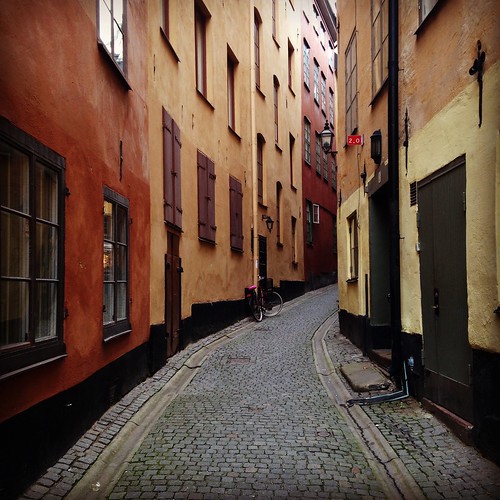
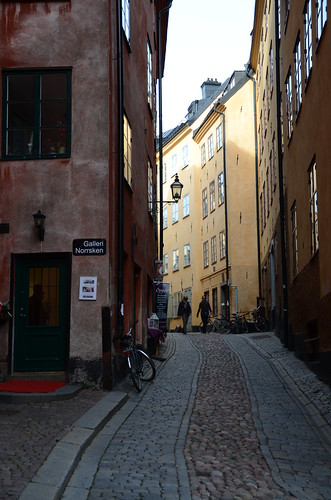
Gamla Stan, the oldest part of Stockholm city. I have a few more to include here from my walk around this little city island. I think what struck me most were the colours. I'm not really sure what I expected, but it wasn't ochre. I knew there would be a lot of red in the north, but for some reason the city colours were a surprise for me.
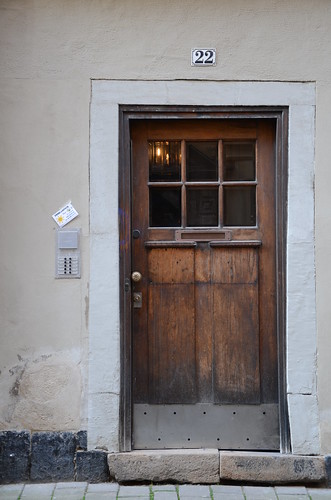
I've got a little collection of photos featuring address numbers of my birthdate
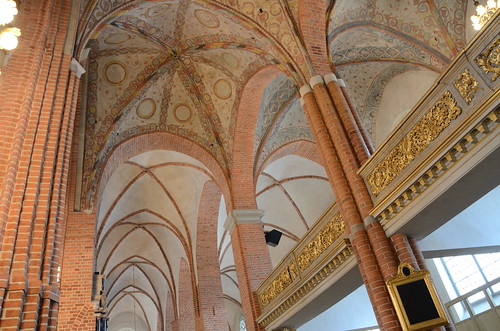
Without groaning kids in tow, I enjoyed my leisurely stroll through the 13th century Gothic brick
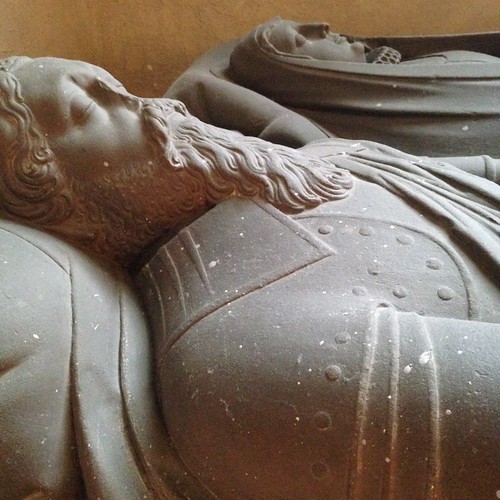
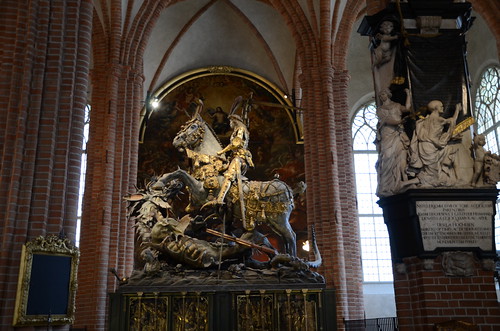
Storkyrkan (Great Church), the oldest church in Gamla Stan. Royal weddings and coronations take place in this church, which is adjacent to the Royal Palace. I always enjoy the formality of historic churches; the soaring ceilings, worn stone grave markers on the floors, ornate carvings, draperies, gigantic pipe organs. There is so much to look at. Here, I was amazed by the wood, antler and metal statue of Saint George slaying the dragon, made in 1489. For a Canadian who's country is only 150 years old, this type of relic is a wonder, indeed.
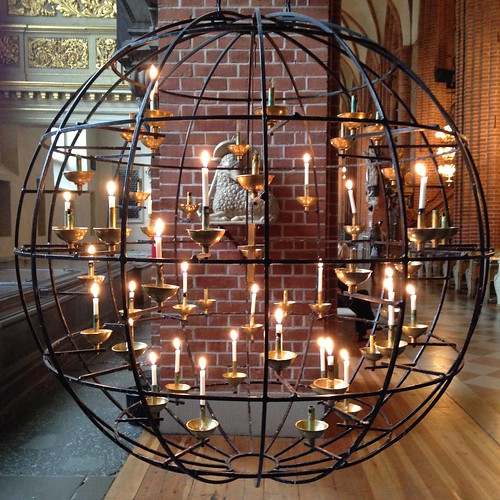
One of the most beautiful candelabras for votive candles that I've ever seen - I love the simplicity of forged iron amid all of the ornate gold leaf sculpture found elsewhere in the curch.
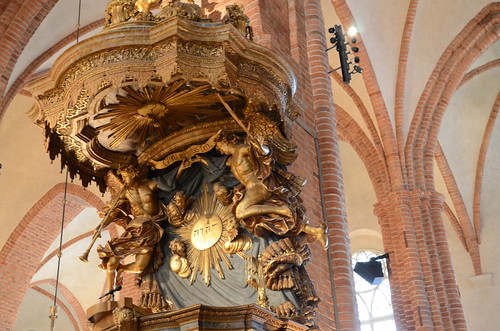
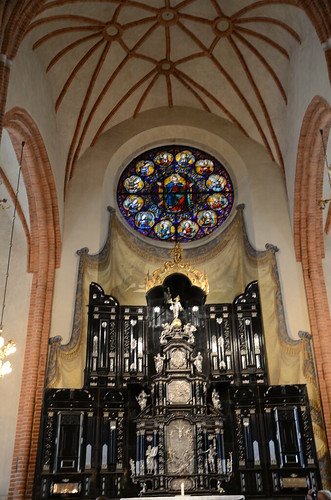
The pulpit was constructed around 1700
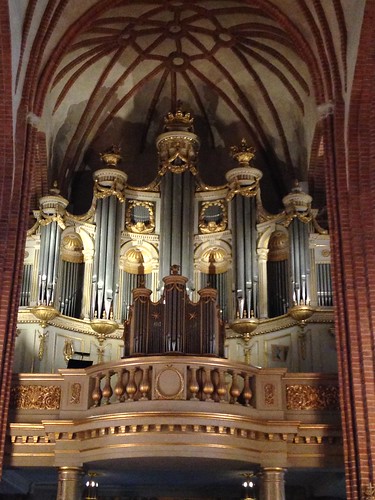
The massive organ at the back of the sanctuary
I never took a great interest in history at school, nor am I a religious person, but I appreciate and am fascinated by historical artifacts and architecture. Plus, it's really fun to photograph!
Saint George
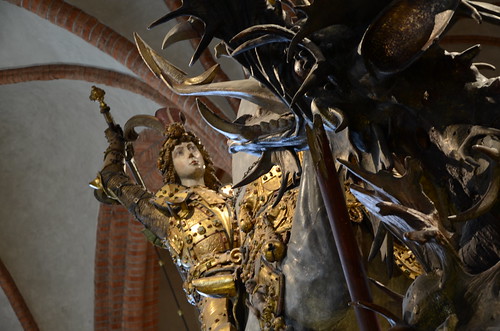
Saint George, detail. This wooden statue has so many elements including antlers and metal. It's a fascinating work of art and really a miracle that is has survived.
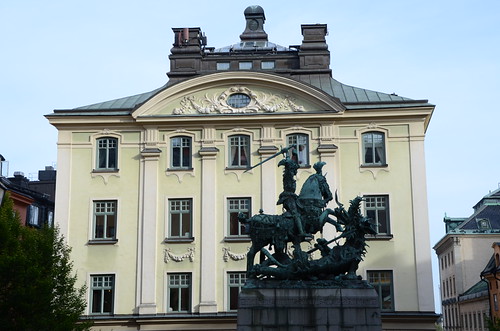
This is a bronze reproduction of the statue, also found in Gamla Stan.
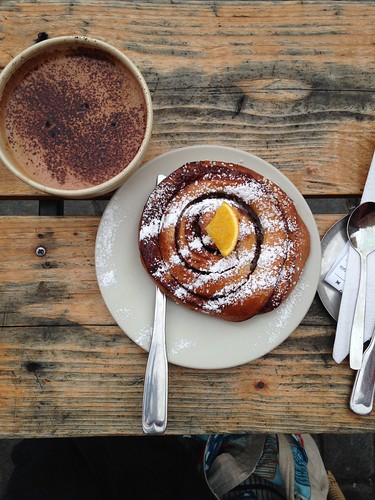
My Supertote photobombed my fika!
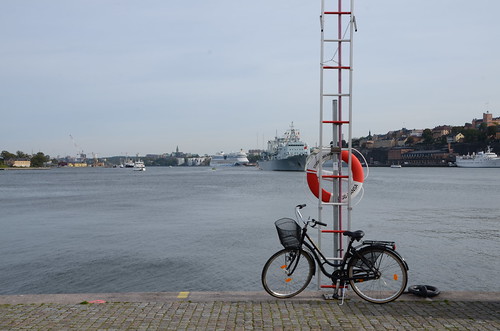
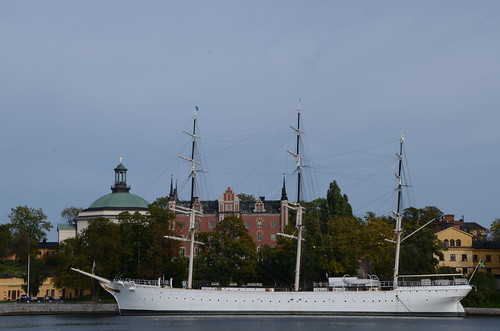
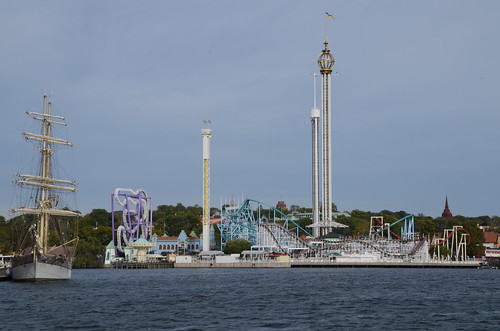
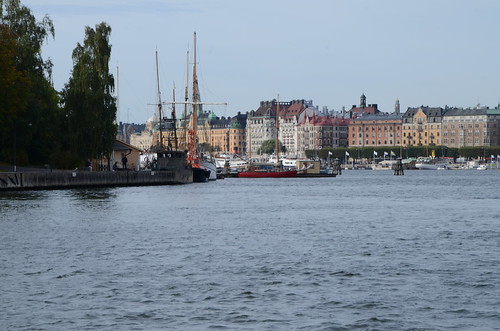
Later in the afternoon, I enjoyed my first official "fika" (fee-kah), Swedish for coffee/tea/cake time. I had a delicious cafe mocha and cinnamon bun sitting on the square outside the Nobel Museum, after which I took my transit pass card and headed to one of the many ferry docks to cross the harbour over to Djurgarden and the Vasa Museum. Here are some views from the ferry ride:
This is looking towards the main road of the harbourfront, where fancy hotels, the Opera House, offices and perhaps even luxury private residences are located in those beautiful buildings lining the waterfront.
Everyone I know that has been to Stockholm told me that I absolutely HAD to visit the
Vasa Museum. I checked it out online before leaving and I have to say, the thought of a smelly old warship from the 16th century really didn't seem like a riveting afternoon. Wow, was I wrong; I am so glad that I took the advice! This ship and her tragic story are fascinating. By now it was close to 4:15 p.m. Luckily, I arrived just in time for the final guided tour in English for the day. The young man leading the tour was so passionate about sharing the history - I felt like we were really getting the inside scoop (isn't it amazing when people truly LOVE their jobs?). If you ever visit, be sure to wait for the tour!
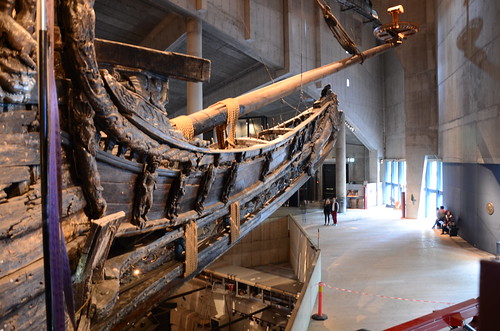
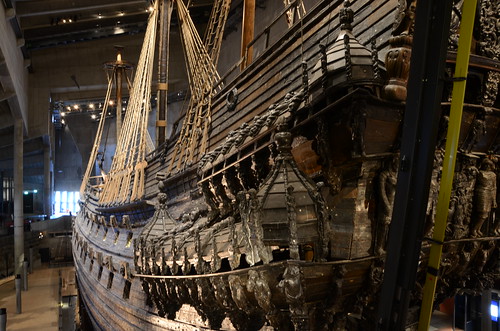
I was equally fascinated with the building itself and it's high-tech environmental controls. Apparently it has the largest, most sophisticated environmental control system of any building in Scandinavia. Constant temperature and humidity and very little natural light. All of these photos were very long exposures, with my camera steadied on railings or against pillars (that's why the are not super sharp).
This vessel has an incredible long story, and an equally incredible short story. Here's the short version: built over two years from 300 oak trees imported from
Poland, completed 1628. Commissioned by King Gustavus II Adolphus of Sweden to battle the
Poles (irony). First
warship designed with double cannon decks (64 guns). Sank on maiden voyage when she keeled over in a small gust of wind and took on water through the canon portholes, shortly after sailing from the Royal Palace. It is thought 50 men lost their lives, trapped in lower decks. Many survived, due to proximity to shore. The Vasa lay on the Baltic sea floor for 333 years until discovered by Anders Franzen and raised in an intricate operation in 1961. She's been in a constant state of
preservation since then.
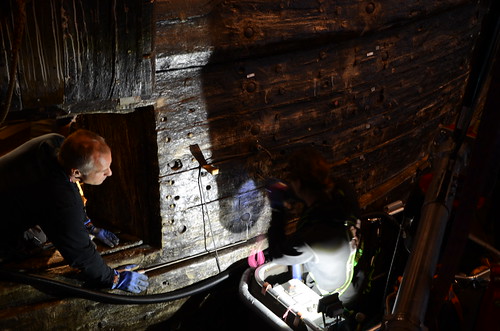
I watched these technicians working to replace all of the iron bolts in the ship with stainless steel ones using laser-guided tools.
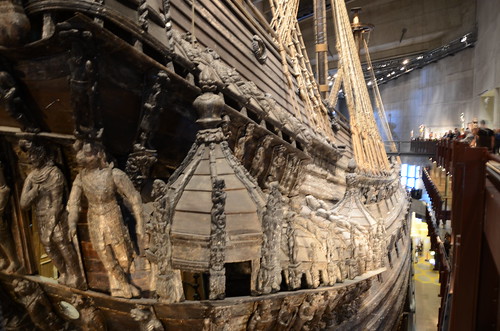
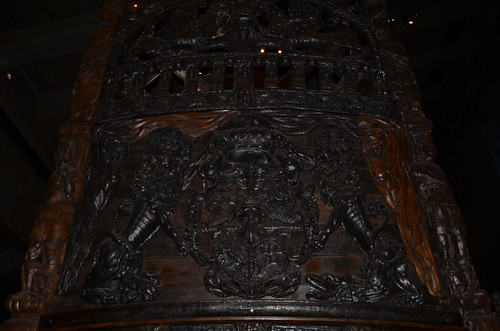
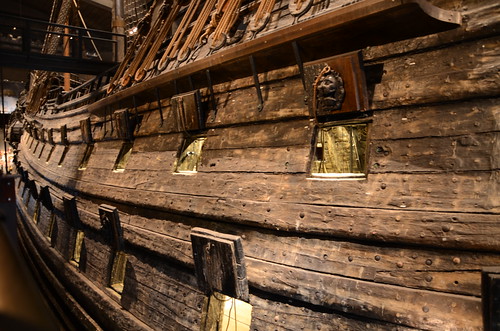
Here at the stern, you can see the tiny windows from which gunners could shoot. The intricate carvings would have been ornately painted in gaudy colours. The king was known as the "Lion" so there are menacing lion carvings all over the ship (below, holding the coat of arms).
If ever you have one day of tourist-time in Stockholm, take my advice. Visit the Vasa!